Get your vast volumes of data structured and
readable with help of Data Engineering process
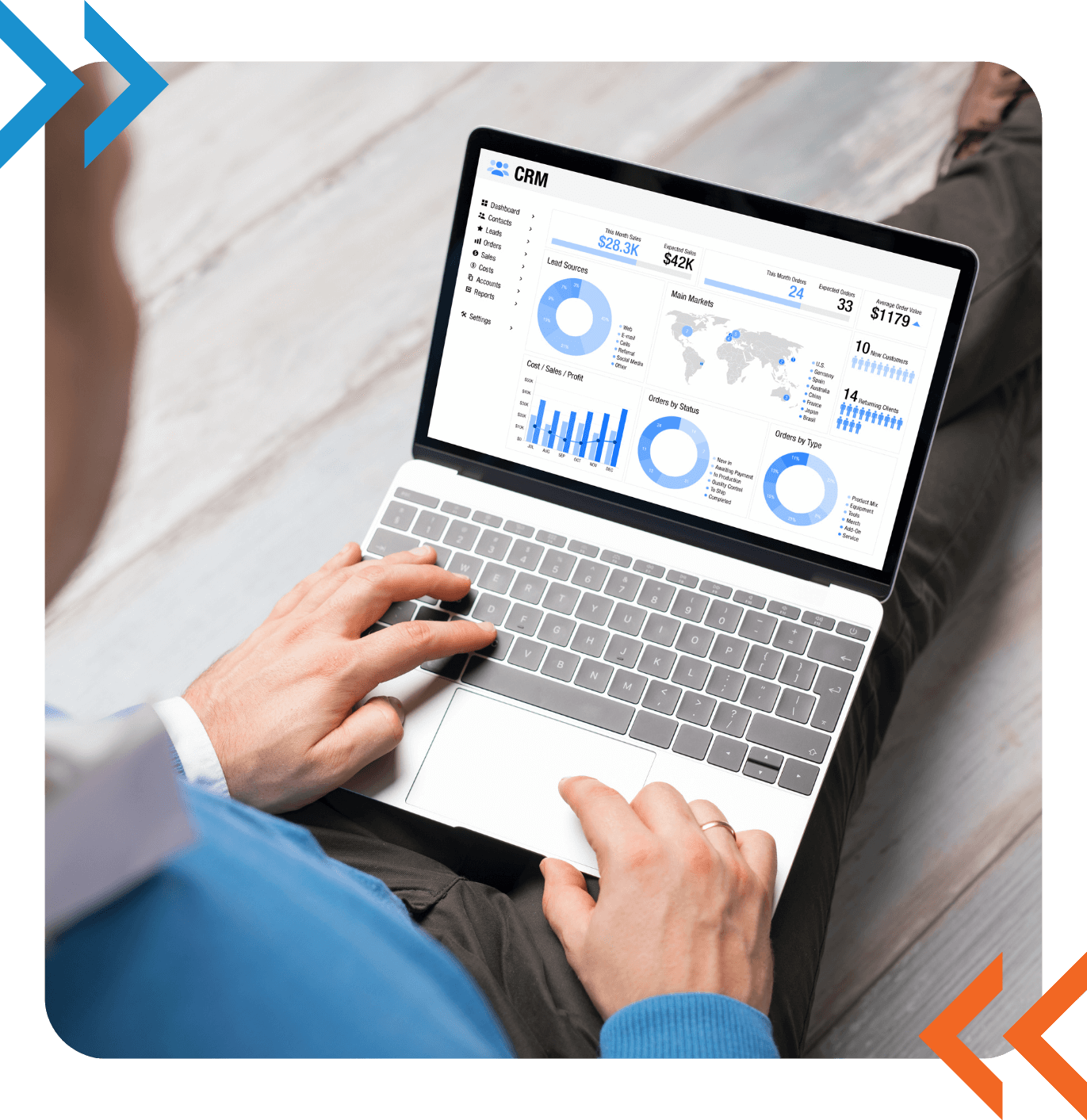
Clean and transform your data with the help of infused data engineering technology
-
With digitalization increasing, data analytics has gained an important role in improving businesses by gathering hidden insights and generating reports. In addition, it helps in performing market analysis based on the current trends and improving our business needs accordingly.
Fast-track your digital transformation with the help of our data-driven techniques and build an effective in-built analytical system. This process allows users to focus more on the decision-making aspect of the data and modernize their business processes, thereby enhancing productivity and efficiency.
Let us help you to create valuable insights which are directly proportional to creating Values
.png)



.png)


Get modernized and transformational changes with the help of our analytical services
Insights
Data engineering helps gather qualified values and hidden insights, which helps businesses track real-time metrics and understand their organization’s role in the global market, which allows them to elevate their business level.

reporting
Reports derived from data analytics platforms are often in graphs, tables, and charts which helps businesses to gauge responses better and faster and act quickly.

Data Engineering & datalake platform can gather vast amounts of information faster & exhibit it in a clear, well-detailed manner, which will help you achieve your business objectives effectively. It also encourages productivity and efficiency as it allows you to spend more time solving complex issues & problems rather than doing mundane, lengthy procedures like data processing.

Access to essential data gives organizations the power to make accurate business decisions to fulfill their end goals. By providing valuable data, data analytics also helps organizations make decisions faster and efficiently, which allows them to outshine the competition and make their mark in the global market.

Budgeting, Planning, Strategizing play a dynamic role in improving business conditions & staying ahead in the competition, which can easily be achieved with the help of relevant BI tools. Businesses can also track their competitor’s products and performance, & brainstorm new ways to differentiate their products and services.

Data lake platform helps organizations in understanding consumer patterns. Most organizations have now started taking real-time feedback, allowing them to better cater to their current customer base while also reaching out to potential ones.
We provide End to End Data Analytics services that cater your business needs

We build cloud-based, on-premise, hybrid best-in-class models with secure, flexible, & unified analytical architectures that promote the use of high-quality, relevant, & accessible data.

We migrate your data assets to modern, scalable cloud-based database platforms such as Snowflake or advanced database platforms available on AWS & Azure.

Evaluate your Azure or AWS software for security, reliability, enhanced productivity & efficiency, cost-effective measures. We offer practical recommendations & effective approaches to upgrade your business level.

We create reusable frameworks for ELT & ETL paradigms which allows us to apply transformations quickly, achieve consistent naming conventions, auditable processes, & easily understood lineage for the ingestion pipeline.

We standardize transformation processes by using modern tools so that the concepts become easy to grasp. We believe that the essential part of the transformation isn’t transformation itself; it’s creating a process that can be reusable, altered, replicated, and understood.

The most crucial step in our data integration consulting practices is that we dynamically adjust & compensate for any structural alterations in the data. Aside from this approach, we also undertake routes highlighting the culprits that could cause errors in data integration (& alert you to the situation!), allowing you to rectify the problem quickly.

Data scientists & analysts no longer need to spend hours cleaning data for analysis and valuable insights. Instead, data cleansing is managed via automated programs in a modern data pack, allowing data scientists to spend their time solving complex business problems & uncover new opportunities.

Data integration is expensive & requires a significant investment. Data movement, transformation, and extensive data integration are all individual, lengthy processes, and their cost differs depending on the amount of data and the number of transitions.